Hearing Aids
So many options…
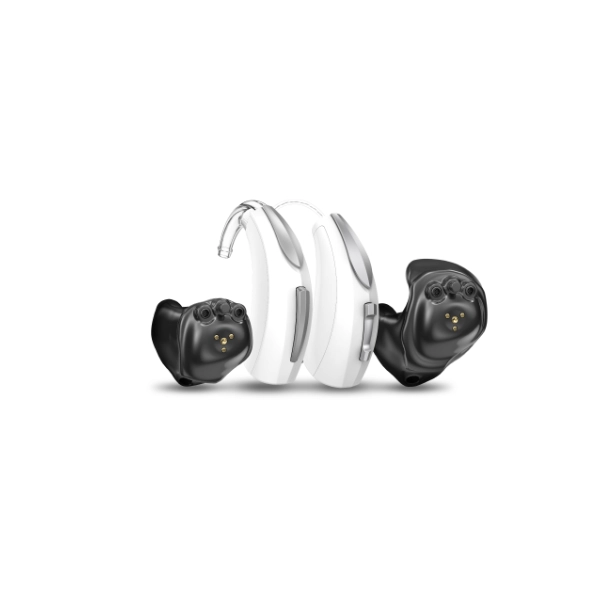
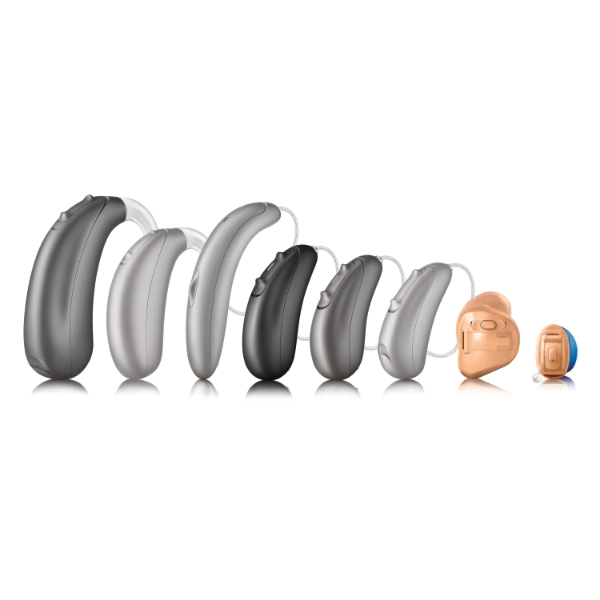
Hearing aids come in a variety of brands, styles and technology levels. Hearing aids can come in rechargeable or non-rechargeable options and the technology level is continuing to improve over time. As an independent hearing clinic, we fit a range of hearing brands which enables us to recommend the hearing aid that best suits your needs. The style and level of technology that will be recommended for you will depend on your hearing loss, communication needs and also ear anatomy. Styles of hearing aids include receiver-in-the-canal (RIC), behind-the-ear (BTE), custom-hearing-aids and assistive listening devices (ALD’s).
Hearing Aid Brands


RIC hearing aids have the bulk of the electronics in a case that sits behind the ear. However, the receiver (speaker) sits in the ear canal. These hearing aids are appropriate for a wide range of hearing losses. Their design aids allows for a nice discreet look while still providing a lot of power when needed. They may be fitted with either a rubber dome or a custom tip depending you’re your ear anatomy and hearing loss.

BTE aids have all the electronics housed in a casing that sits behind the ear. There is then some tubing that connects with aids itself to a component the directs the sound down the ear canal and anchors the aid to your ear. These hearing aids offer great flexibility in terms of the hearing losses and ear anatomies they are appropriate for. They have the added bonus of not having electronics in the ear which means they are less prone to damage from wax and therefore more robust.

BTE’s come in three main types, open-fit BTE’s, standard BTE’s and power BTE’s. An open fit BTE uses a discreet slim tube to deliver the sound into your ear canal. This type of fitting is generally used for a high frequency hearing loss. A standard BTE has a thicker tube to deliver the sound into the ear canal than an open fit BTE which makes it appropriate for more significant hearing losses. A power BTE also uses the thicker tubing to deliver the sound in the ear but is bigger and more powerful than a standard BTE making it appropriate for severe to profound hearing losses.

Custom hearing aids are those where all of the electronics are housed in the ear itself. They are custom made to fit your ear. They come in different sizes from Invisible-In-Canal (IIC) aids which are very small and sit deep in the ear canal up, to In-The-Ear (ITE) aids which fill up the entire ear. There are also Completely-In-The-Canal aids which come out to the entrance of the ear canal and In-The-Canal aids which fill up part of the ear.

As all the electronics need to fit into the casing- the size will vary depending on the anatomy of the ear. Some people’s ear canals are too narrow or bendy for the smaller custom hearing aids. You may also need to sacrifice some of the technology to get a smaller sized hearing aid.
While custom hearing aids can be a discreet solution and may be the most appropriate option for ears with malformations, they may not be appropriate for small or bendy ears or those with wax issues.

There are a range of accessories that can be used in conjunction with your hearing aids that can help with specific situations such as meetings, restaurants and using the phone. The use of these accessories can extend the functionality of your hearing aids.

Assistive listening devices (ALD’s) may be used as an alternative to hearing aids. For example, a TV device with a set of headphones may be the best option for someone whose only concern is hearing the TV better.